

Topical authority, in plain English, is showing Google and your readers that you actually know what you’re talking about within a specific subject.
You don’t build it by publishing one good article and moving on to something completely different. You build it by creating an in-depth body of content around a topic, answering the questions people have, connecting those answers together, and backing your content up with real experience.
That can include original photographs, screenshots, videos, testing, personal opinions, and examples that couldn’t have come from someone who simply researched the topic for 20 minutes.
Building topical authority is one of my biggest priorities when starting a website from scratch. But I’ve also learned that content alone isn’t enough. Internal links, backlinks, site structure, author credibility, and the quality of the content all have to work together.
What Is Topical Authority?
I like to think of topical authority as a circle.
Put your main topic in the middle. Let’s use camping as an example.
Around camping, you might have:
- tents
- sleeping bags
- campsite setup
- camping with kids
- cooking
- gear
- weather
- beginner mistakes
- safety
- troubleshooting
Then each of those topics creates even more questions.
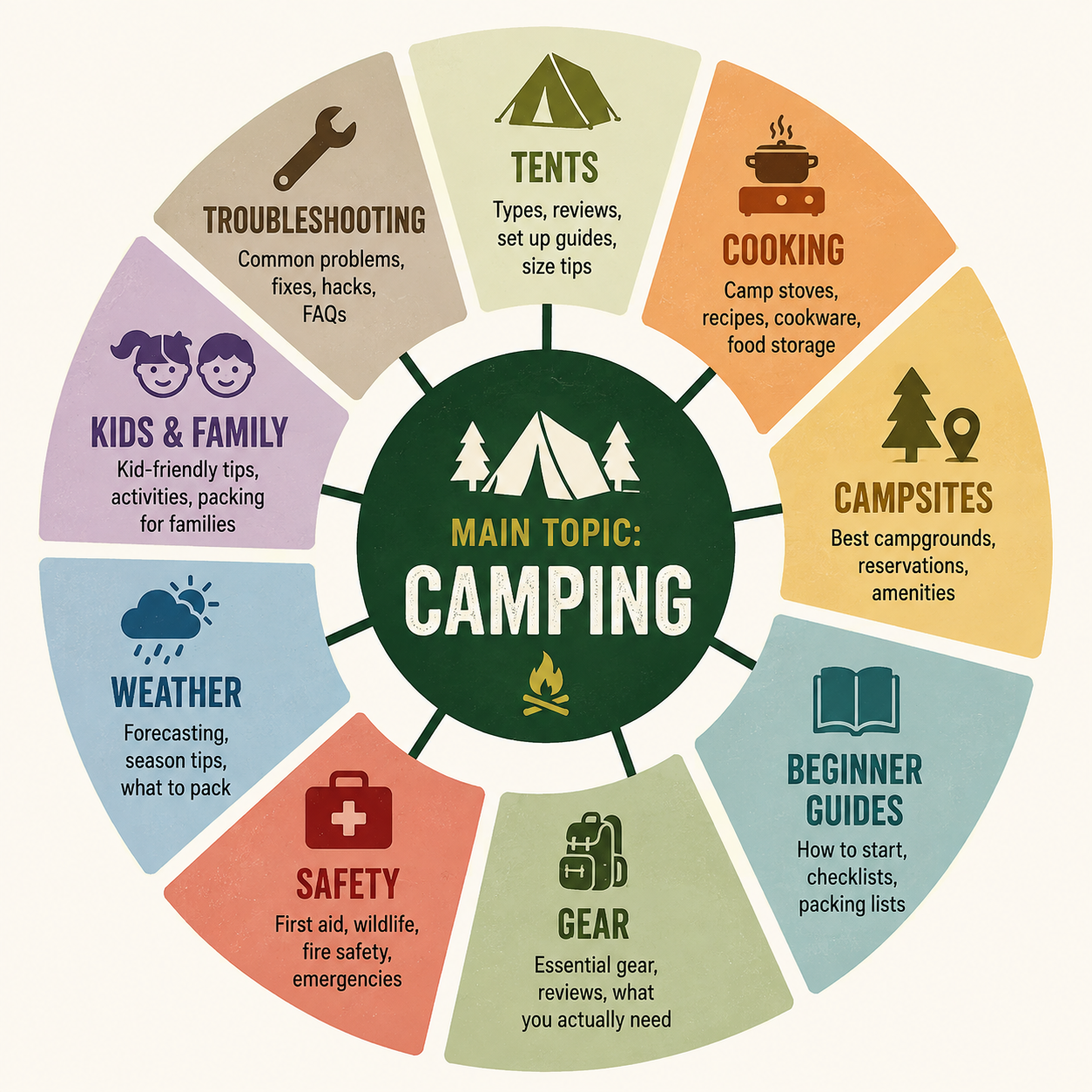
You keep moving outward, answering useful questions while everything still points back toward the same general area of expertise.
The goal isn’t simply to say, “I have 50 articles about camping.”
The goal is for someone to land on your site with a camping question, get a useful answer, find another relevant answer, and start seeing that you know this subject from multiple angles.
Google’s own guidance encourages site owners to create people-first content that demonstrates first-hand expertise and depth of knowledge. Google also uses the concept of E-E-A-T, which stands for experience, expertise, authoritativeness, and trustworthiness, when discussing the qualities its systems try to identify in helpful content. E-E-A-T itself isn’t one individual ranking factor. (source)
Start Narrower Than You Think
One mistake I made with Digital Whale Club was trying to figure out the entire identity of the website before I had narrowed down what I actually wanted to talk about.
I’ve owned Digital Whale Club since 2023, but for a long time I didn’t really sit down and consistently write for it. The bigger vision included collectibles, investing, building businesses, making money online, and several other things.
That’s a brand vision. It’s not a useful starting content cluster.
Now I’m much more focused on areas where I have real experience, particularly building websites, SEO, software, online business, and making money online.
If you’re starting a new site, I recommend going narrower than you initially think.
Don’t start by trying to become the authority on fitness.
Find a specific part of fitness where you have knowledge and where people repeatedly need help.
The same applies to camping, investing, websites, or practically any other niche.
Nothing is really too niche if legitimate questions exist around it. The problem comes when you go so narrow that every article starts answering basically the same search intent.
How to Build Your First Topical Cluster
You don’t need to overcomplicate this.
1. Choose One Main Area
Start with one subject you understand well and can realistically create useful content around.
Don’t worry about everything your website might cover five years from now.
Pick the first cluster.
My first website became extremely in-depth around combat sports. We covered training, techniques, informational questions, and other closely related subjects. We can still go deeper, but the existing content makes it very clear what the website knows about.
That’s what you’re trying to build.
2. Find the Questions Surrounding That Topic
Start with what you already know.
What questions have you had?
What problems repeatedly come up?
What would a beginner ask?
What happens after someone solves the first problem?
Then use tools to expand the list.
I use Ahrefs for keyword research and competitor analysis, and I’ll use AI tools like ChatGPT to help uncover related questions or angles I may have missed.
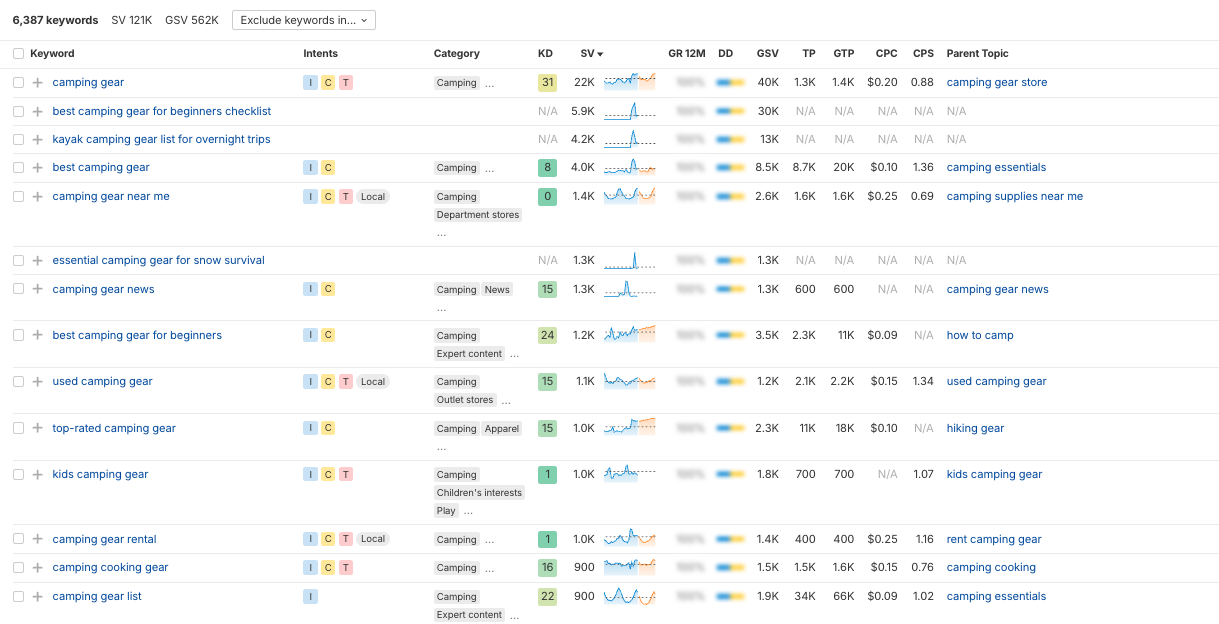
AI is excellent for accelerating this research process. Google specifically says generative AI can be useful for researching a topic and adding structure to original content. At the same time, creating large numbers of pages without adding value may violate Google’s scaled content abuse policies. (source)
That’s roughly how I look at it too.
Use AI as a partner. Don’t use it as an excuse to publish 500 articles you know nothing about.
3. Don’t Be Afraid of Zero-Volume Keywords
This is where I disagree with being overly dependent on keyword tools.
If Ahrefs says a keyword gets zero searches, that doesn’t automatically mean nobody will ever visit the article.
Keyword data isn’t a crystal ball. Ahrefs itself explains that search volume in any SEO tool is an estimate and recommends against using search volume as the sole factor when deciding which keywords to target. (source)
If it’s a legitimate question that someone interested in your topic would reasonably ask, I think it’s worth considering.
People search in incredibly specific ways. They’re also increasingly discovering information through AI-powered search experiences. Google’s current guidance for appearing in generative AI features continues to emphasize unique, useful content and original points of view rather than creating commodity content that simply repeats what’s already available. (source)
If you’ve personally had a question, there’s a good chance somebody else will eventually have it too.
I would rather have the best answer sitting there waiting for that person than ignore the subject purely because a tool showed me a zero.
4. Keep Going Until You’re Repeating Yourself
I don’t believe there’s a magic number of articles required to establish topical authority.
Five isn’t the answer.
Thirty isn’t the answer.
One hundred isn’t automatically the answer either.
Keep going deeper while you’re finding legitimate questions that deserve their own answers.
When articles start becoming repetitive, targeting essentially the same intent, or cannibalizing one another, that’s when you need to reconsider whether another page actually adds anything.
Make Your Content Communicate
Once you’ve created these articles, connect them.
I don’t mean putting 25 internal links into every article because somebody told you more links are better.
The links need to make sense.
If I’m discussing XYZ in an article and I’ve already written an entire guide that goes deeper into XYZ, that’s a logical internal link. It gives the reader somewhere useful to go next.
Over time, a strong cluster starts communicating naturally.
You’ll write a paragraph and immediately think, “I already have another article that explains this.”
Link to it.
Google says links help it discover new pages and can be used as a signal when determining page relevance.
Just as importantly, internal links make the website more useful for the person actually reading it.

Link Whisper is a WordPress internal linking plugin that helps website owners find relevant linking opportunities, add contextual internal links faster, and identify orphaned content. It simplifies site structure and internal link management without requiring you to manually search through every post.
Content Alone Isn’t Enough
This is probably the part of topical authority that gets oversimplified the most.
You can’t just publish a giant pile of related content and assume you’ve won.
Show your experience.
Use your own screenshots. Take original photographs. Record a video when a video makes sense. Talk about what worked, what didn’t work, and what surprised you.
Google specifically encourages content that provides original value, demonstrates first-hand knowledge, and makes it clear who created the content.
Then start getting outside validation.
In my experience building websites, backlinks are one of the biggest things that actually move the needle.
Once I’ve got roughly my first 10 strong pieces of content forming a foundation, I’m already thinking about links.
I particularly want links from relevant websites. If I run a fitness site, a credible fitness publication linking to me makes much more contextual sense than some random pet website.
You can earn links through guest contributions, expert quotes, broken-link outreach, useful resources, directories, partnerships, and simply producing something good enough that other people want to reference it.
You need the content first. Then you need other signals reinforcing that content.
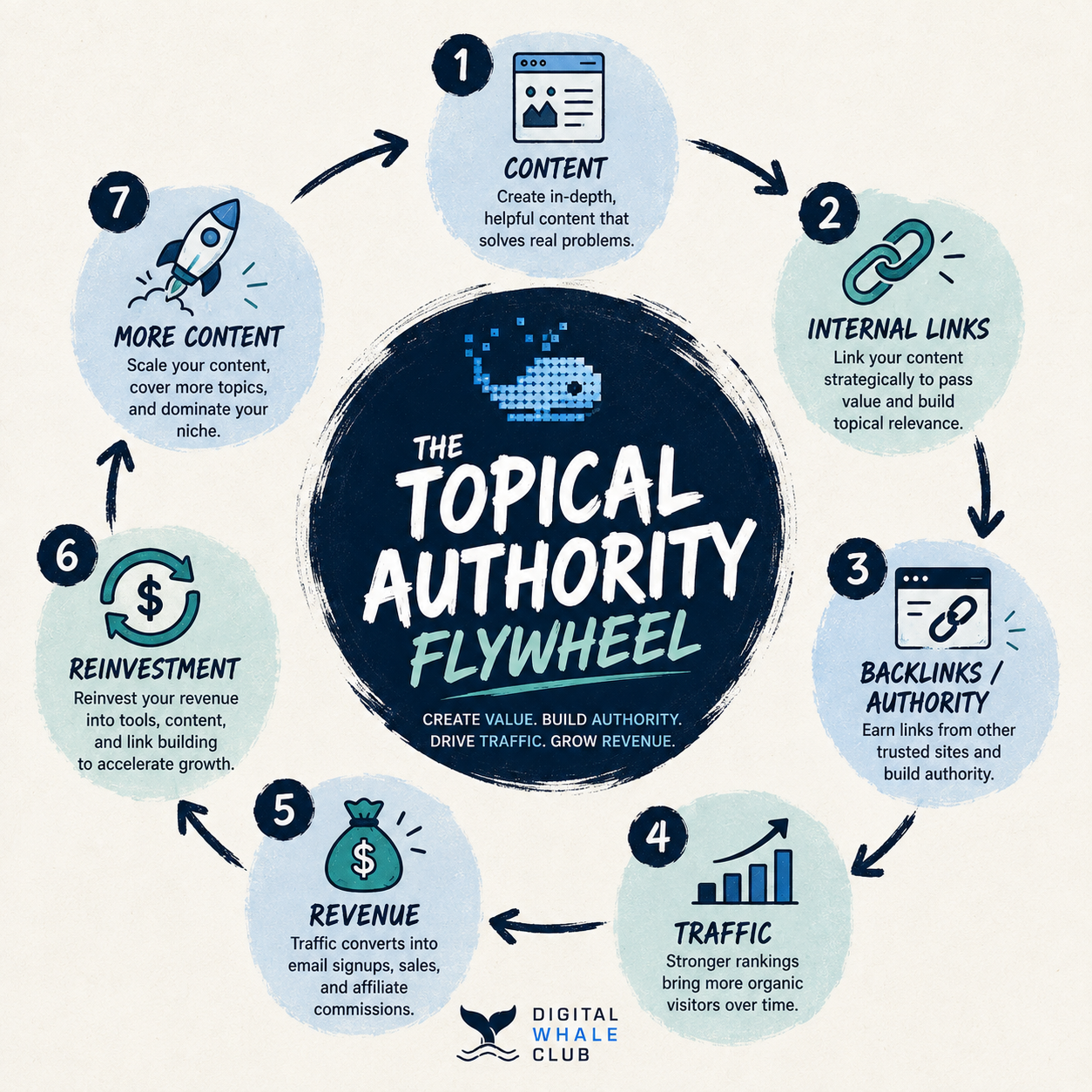
Build the Topical Authority Flywheel
This is ultimately how I think about the entire process:
Create useful content → interlink it → build backlinks and outside authority → grow traffic → make money → reinvest into the website → create more and better content.
Then you keep going.
Invest in better software. Invest in links. Improve old articles. Add photos and videos. Expand clusters. Build distribution outside Google. Create a YouTube channel, social presence, email list, or whatever actually makes sense for your business.
You can’t really cheat topical authority if you’re trying to build something that lasts.
There are no magic SEO tricks that replace doing the work.
Build something useful. Answer real questions. Show that you have experience. Connect your content properly. Get other credible websites and people talking about it.
Then give it time to compound.
That’s how you stop treating a website like a collection of blog posts and start treating it like a piece of digital real estate.
Frequently Asked Questions
How many articles do you need to build topical authority?
There’s no fixed number. You need enough useful content to cover the meaningful questions surrounding your topic without publishing repetitive pages simply to increase your article count.
Can zero-volume keywords help build topical authority?
Yes. I publish content around zero-volume keywords when the question is legitimate and relevant to the cluster. Keyword tools are useful for estimating opportunity, but I don’t let a zero automatically decide whether a useful question deserves an answer.
How long does it take to build topical authority?
There’s no universal timeline. I look at topical authority as a long-term process involving content, internal links, backlinks, experience, site history, and outside credibility. Build it with the expectation that the asset compounds rather than expecting immediate results.
How to build website authority, win Google traffic, and create an online asset that grows for years on end.
This course is everything I learned along the way, taught in one hour, without the fluff.